
Text Analysis Simplified!
The perfect tool for an information-rich world
Four short video tutorials that show you the DICTION essentials and how you can use it quickly and easily
A computer-assisted program for determining the tone of a verbal message. Uses pre-defined dictionaries to process a passage and compares results to built-in norms. Accommodates user-created dictionaries and available for Windows® and Mac® systems.

Used in over seven hundred studies in marketing, finance, political science, communication, sociology, and the digital humanities
DICTION...Now a Great Option for the Big Data Era
One of the first and most heavily used programs for comprehensively
analyzing English-language texts
About Us
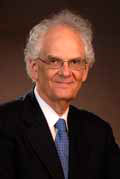
Roderick P. Hart
DICTION: The Text-analysis Program was originally created by Roderick P. Hart, who holds the Allan Shivers Centennial Chair in Communication and is Professor of Government at The University of Texas at Austin. Hart’s area of special interest is political language and rhetorical analysis. He is the author or editor of sixteen books, including his newest, Trump and Us: What He Says and Why People Listen. (Cambridge University Press, 2020).
Hart has been named a Fellow of the International Communication Association, a Distinguished Scholar by the National Communication Association, and received the Edelman Career Award from the American Political Science Association. He was a 2015 Annenberg Resident Fellow at the University of Pennsylvania and a 2018 Shorenstein Resident Fellow at Harvard University.
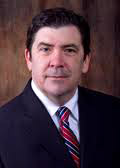
Craig E. Carroll
Craig Carroll (Ph.D., The University of Texas at Austin) is Executive Director of the Observatory on Corporate Reputation® (OCR), and Lecturer of Management in the Department of Strategy and Environment at Rice University’s Jones Graduate School of Business. He also serves as the Communications Institute Leader of The Conference Board. Dr. Carroll’s teaching, research, and public engagement focuses on the roles of communication and media for creating social change through organizations, with a focus on corporate trust, social responsibility and reputation. He serves on the editorial board of several leading scientific journals in corporate communication, corporate affairs, and corporate reputation. He was named to Trust Across America – Trust Across the World’s Top Thought Leaders in 2020.